
Every year, thousands of families spend hundreds or even thousands of dollars on ACT test prep, expecting dramatic score jumps. The reality, backed by recent research, is more nuanced. A 2025 meta-analysis found that test prep produces a modest but real average effect, meaning results vary widely depending on how you prepare. This guide cuts through the marketing noise to give you an honest, evidence-based look at what ACT prep can realistically do for your student and how to make every study hour count.
Table of Contents
- Understanding ACT test prep: What it covers and why it matters
- Types of ACT test prep: Comparing methods and outcomes
- How to select the right ACT prep: Diagnosing needs and setting goals
- Measuring and tracking ACT prep progress: What research says
- What most ACT prep guides miss: Our real-world advice
- Get personalized ACT prep support
- Frequently asked questions
Key Takeaways
| Point | Details |
|---|---|
| Prep boosts scores modestly | Evidence shows ACT test prep usually produces modest average score gains, not huge jumps. |
| Choose prep based on needs | The most effective prep targets diagnosed skill gaps and timing, not just course popularity. |
| Methods vary in effectiveness | Self-study, courses, and tutoring each have benefits; their outcomes can differ based on student needs. |
| Tracking progress is vital | Monitoring practice test scores and skill improvement ensures your prep is actually working. |
| Real guidance beats hype | Expert insight warns against generic prep promises and advocates for personalized preparation. |
Understanding ACT test prep: What it covers and why it matters
ACT test prep is any structured effort to improve a student's performance on the ACT exam. That includes practice tests, content review across math, reading, English, and science, and strategies for managing timing and test anxiety. The goal is not just a higher score. It is also building the confidence and skill mastery that make test day feel manageable rather than terrifying.
Most families assume that enrolling in a prep course automatically leads to a big score increase. That assumption deserves a closer look. Research shows that the effects of test prep are real but often modest. A 2025 meta-analysis of test-prep effects reported an overall positive effect on large-scale criterion test performance (g = .26, 95% CI = .10 to .42). In plain terms, that is a small to medium effect. It is meaningful, but it is not the five to ten point miracle some programs advertise.
"Test prep works best when it targets specific, diagnosed skill gaps rather than covering everything at once."
What does this mean for your student? It means that generic prep programs may help a little, but targeted, personalized prep tends to produce better results. Students who walk into prep with a clear picture of where they struggle, whether that is ACT math timing, reading comprehension, or science data interpretation, are better positioned to make real gains. You can explore ACT prep course options that focus on individualized skill building rather than one-size-fits-all instruction.
Common misconceptions also get in the way. Many students believe that simply doing more practice tests will automatically translate to higher scores. Practice tests are a valuable tool, but only when paired with careful review of mistakes and deliberate work on weak areas. Without that analysis, you are just repeating the same errors under timed conditions. Looking at real student journeys can give families a grounded sense of what realistic progress looks like.
Key takeaways from the research:
- Test prep produces real but modest average score gains.
- Effectiveness varies significantly based on method and individual needs.
- Targeted prep outperforms generic prep in most cases.
- Confidence and skill mastery matter just as much as raw score improvement.
Types of ACT test prep: Comparing methods and outcomes
Understanding the basics, it helps to know how different prep options compare and which might suit your needs best. There is no single "best" method. The right choice depends on your student's learning style, schedule, budget, and specific skill gaps.
Here is a clear comparison of the most common ACT prep approaches:
| Method | Typical Cost | Flexibility | Evidence of Effectiveness |
|---|---|---|---|
| Self-study (books, free resources) | Low ($0 to $50) | High | Moderate; depends on discipline |
| Group prep courses | Medium ($200 to $1,000) | Low to medium | Variable; inconsistent across studies |
| Private tutoring | High ($50 to $200/hr) | High | Strong when targeted to skill gaps |
| Online platforms (apps, videos) | Low to medium ($10 to $300) | Very high | Emerging; varies by platform quality |
The research is clear that effects of specific preparation methods on SAT/ACT outcomes can be inconsistent across studies. A group course that works well for one student may do almost nothing for another. This is not a flaw in the student. It is a flaw in the assumption that one method fits everyone.
Pros and cons at a glance:
- Self-study works well for highly motivated students who can stay on schedule without external accountability. It falls apart without structure.
- Group courses offer peer energy and structured timelines, but they move at a fixed pace that may be too fast or too slow for your student.
- Private tutoring is the most flexible and targeted option, especially for students with identifiable weak spots in specific subject areas.
- Online platforms are convenient and affordable, but they require the student to self-direct, which many high schoolers find difficult during a busy school year.
Pro Tip: Choose your prep method based on your student's actual skill gaps, not based on what is most popular or what a friend used. A student who struggles with ACT math timing needs a different solution than one who freezes up on science passages. Think about planning test prep timing carefully so you are not rushing into a method without a clear rationale.
How to select the right ACT prep: Diagnosing needs and setting goals
Given the variability in prep outcomes, it is crucial to personalize your test prep for maximum impact. The single biggest mistake families make is skipping the diagnostic step. They sign up for a course before they even know what the student needs to work on.
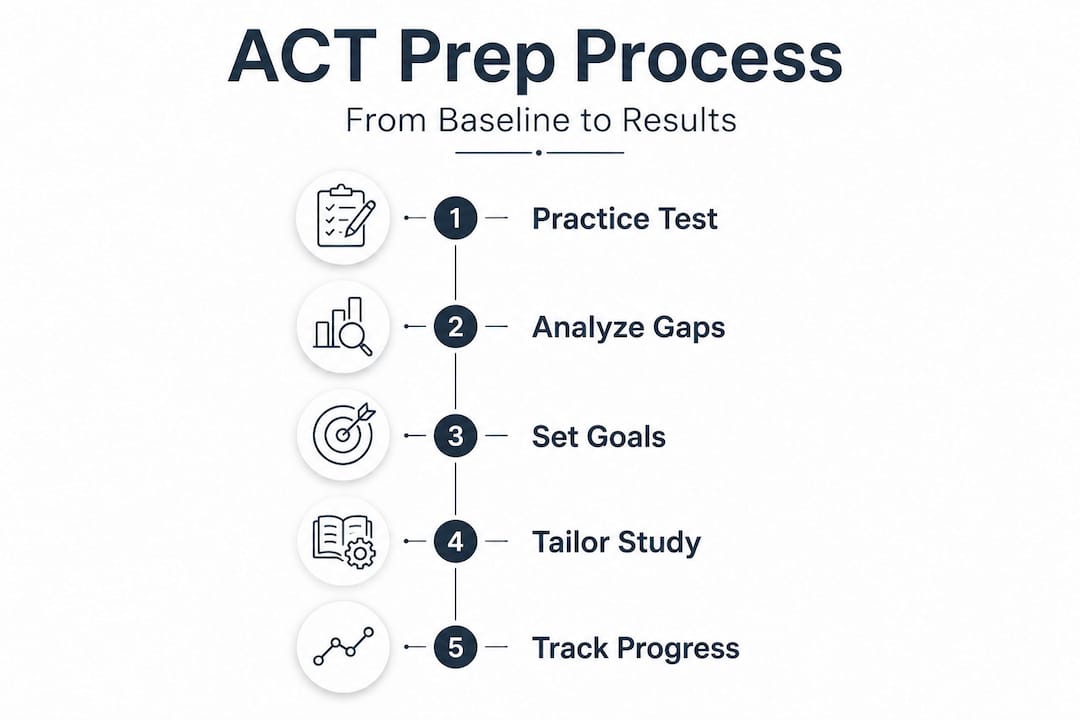
Here is a step-by-step approach to diagnosing your student's needs before choosing any prep program:
- Review official ACT score reports. If your student has taken the ACT before, look at the subscores. The ACT breaks down performance by skill area, such as pre-algebra, plane geometry, or punctuation. These subscores tell you exactly where points are being lost.
- Analyze question types missed. Take a full-length practice test under real timed conditions. After scoring it, sort the missed questions by type and topic. Look for patterns. If your student misses most of the trigonometry questions and all of the "author's purpose" reading questions, those are your targets.
- Assess timing and confidence. Ask your student honestly: are they running out of time on certain sections? Are there question types that trigger anxiety or avoidance? Timing issues and confidence problems require different solutions than pure content gaps.
- Set a realistic target score. Look at the average ACT scores for the colleges your student is considering. Set a target that is meaningful but achievable given the timeline and current baseline.
The research supports this approach directly. Prep should be chosen and designed based on diagnosed needs, including skills, content gaps, and timing, rather than assuming any course will produce large score jumps.

Pro Tip: Before enrolling in any ACT prep program, have your student take a full official practice test under real conditions. Score it section by section and review every missed question before making any decisions about prep format or provider.
Here is a quick reference for diagnostic actions and what they reveal:
| Diagnostic action | What it tells you | Benefit |
|---|---|---|
| Full practice test (timed) | Overall baseline and pacing issues | Reveals timing problems early |
| Subscore analysis | Specific content weaknesses | Focuses prep on real gaps |
| Error pattern review | Recurring mistake types | Prevents wasted study time |
| Confidence self-rating | Anxiety and avoidance areas | Guides pacing and support needs |
Once you have a clear picture, tailoring prep to student strengths becomes much easier. You are no longer guessing. You are building a focused plan. From there, exploring prep courses with a specific checklist in hand will help you ask the right questions and avoid programs that are not built for your student's needs.
Measuring and tracking ACT prep progress: What research says
Once you are underway with ACT prep, tracking progress is vital. Without measurement, you cannot tell whether the prep is working or whether you need to adjust the approach. Many students and families skip this step, and then feel blindsided when the actual test score does not reflect the effort invested.
Research confirms that test prep can produce positive effects on test performance, but it also stresses that effects may be modest. That makes tracking even more important. You need to know early whether progress is happening so you can course-correct before test day.
Key indicators to track throughout ACT prep:
- Practice test scores by section, not just overall composite.
- Time per section, tracking whether your student is finishing or running out of time.
- Accuracy rates on specific question types that were identified as weak areas.
- Stress and confidence levels before and after timed practice sessions.
- Error patterns, noting whether the same types of mistakes keep appearing or are gradually disappearing.
"Tracking progress section by section gives you a much clearer picture than just watching the composite score."
Pro Tip: After every practice session, spend at least ten minutes documenting what went well, what went wrong, and what specific topics need more attention next time. This written record becomes a roadmap that makes each subsequent session more focused and effective.
One pattern worth watching: students often see quick early gains as they get comfortable with the test format, followed by a plateau. That plateau is normal and does not mean prep has stopped working. It usually means it is time to shift focus from format familiarity to deeper content work. Reading test prep testimonials from students who have been through this process can help normalize the ups and downs of the prep journey.
What most ACT prep guides miss: Our real-world advice
Here is the uncomfortable truth that most test prep marketing will never tell you. More prep is not always better prep. Families sometimes respond to a disappointing practice test score by doubling the number of prep hours or switching to a more expensive program. Neither of those moves helps if the underlying problem is a specific skill gap that has not been properly diagnosed and addressed.
We have seen this pattern repeatedly over more than two decades of working with students. A student does 40 hours of prep with a large group program and gains two points. The same student then spends eight focused hours working on the specific ACT math concepts they were missing and gains four more. The second phase worked not because it was longer, but because it was targeted.
The research backs this up. Prep should be chosen and designed based on diagnosed needs rather than assuming any course will produce large score jumps. That is not a criticism of any particular program. It is a reminder that the student's individual profile should drive every decision.
The other thing most guides miss is the emotional dimension of test prep. Students who feel anxious about the ACT often need confidence-building as much as they need content review. Timed practice under realistic conditions, paired with honest and supportive feedback, does more for a nervous test-taker than any amount of content drilling. Real progress often happens in the space between content knowledge and test-day composure.
Our honest advice: resist the pull of programs that promise dramatic gains for everyone. Instead, start with a real diagnostic, set a realistic target, choose a method that fits your student's learning style and schedule, and track progress consistently. If something is not working after four to six weeks, adjust. That kind of intentional, flexible approach is what personalized guidance is designed to support.
Get personalized ACT prep support
If this article has made one thing clear, it is that the best ACT prep is the kind built around your student specifically. Generic programs can help, but targeted, individualized support is where real, lasting score improvement happens.
At mathtutorct.com, we specialize in exactly that kind of personalized approach. Richard Corn has been helping students improve their ACT math scores since 2004, with published prep materials that have reached more than 50,000 students. Whether your student needs focused math tutoring, full ACT prep support, or help figuring out where to start, we can build a plan that fits. Schedule a free consultation to talk through your student's needs, or explore ACT prep courses to see what structured, targeted prep looks like in practice. The first step is always a real conversation about where your student is and where they want to go.
Frequently asked questions
What is ACT test prep?
ACT test prep refers to any structured activity, including practice tests, review sessions, and tutoring, designed to boost scores and confidence on the ACT. Research finds modest average effects for test prep overall, with results varying based on method and individual fit.
Does ACT test prep always improve scores?
Not always at the level families expect. Research shows that test prep effects can be inconsistent across studies, and gains tend to be modest on average rather than dramatic.
How should families choose an ACT prep course?
Select a prep approach based on diagnosed skill gaps and timing issues, not just popularity or convenience. A diagnostic test taken before enrolling will give you the clearest picture of what your student actually needs.
What are signs ACT prep is working?
Progress shows up as higher practice test scores, improved section timing, stronger accuracy on previously weak question types, and greater confidence going into timed sessions. Research confirms a positive effect on test performance, though gains may be gradual.
Is tutoring better than self-study for ACT prep?
Tutoring tends to outperform self-study when a student has specific, identifiable skill gaps, because a tutor can focus directly on those areas. However, effectiveness depends more on diagnosis and focus than on format alone.